
What Is the Function of a Polishing Motor ?
Need a flawless finish on metal, wood, or composites? A polishing motor is the powerhouse behind professional-grade surface refinement.
The polishing motor:
- Drives polishing wheels/belts at precise speeds (typically 1,500-3,000 RPM)
- Generates consistent torque for uniform material removal
- Accommodates various attachments (buffing wheels, abrasive belts, brushes)
- Prevents overheating with thermal protection features
While all polishing motors perform the same core function, choosing the right one requires understanding your specific needs.

How to Choose a Suitable Polishing Motor
Overwhelmed by motor specs? Selecting the ideal polishing motor hinges on three key factors: power, speed, and durability.
Selection criteria:
- Power (0.5-2 HP): Higher HP for hard metals/large surfaces
- Speed control: Variable RPM (500-3,500) for multi-material work
- Build quality: Look for sealed bearings/brushless motors
- Mounting type: Bench-mounted vs. handheld configurations
Deep Dive: Motor Specifications by Application
Polishing Motor Comparison Table
| Application | Recommended HP | Ideal RPM Range | Key Feature |
|---|---|---|---|
| Jewelry | 0.25-0.5 | 500-1,500 | Precision speed control |
| Automotive | 1-1.5 | 1,800-2,500 | High torque |
| Metalworking | 1.5-2 | 2,000-3,500 | Thermal overload protection |
| Woodworking | 0.75-1 | 1,200-2,000 | Dust-resistant housing |
Common Purchasing Mistakes
- Overpowering: Using 2HP motors for delicate work wastes energy
- Fixed-speed motors: Limits material versatility
- Ignoring duty cycle: Continuous-use motors cost more but last longer
- Poor ergonomics: Handheld motors should weigh under 5 lbs for comfort
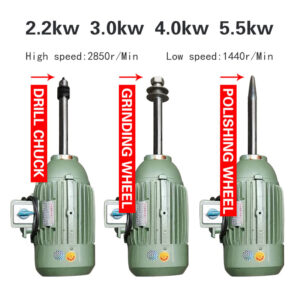
Polishing Machine and Polishing Wheel: The Perfect Pair
Even the best motor fails without the right polishing wheel. This dynamic duo determines your finish quality.
Wheel selection guidelines:
- Material: Felt for mirrors, sisal for cutting, cotton for final polish
- Diameter: Larger wheels (= more surface contact)
- Hardness: Soft wheels conform to contours, hard wheels flatten surfaces
- Arbor size: Must match machine spindle (typically ½" or ⅝")
Deep Dive: Wheel and Machine Synergy
Wheel Type Performance Guide
| Wheel Type | Best For | Compatible Compounds | Finish Level |
|---|---|---|---|
| Sisal | Initial cutting | Black/red compounds | Matte |
| Spiral Sewn | Intermediate | Brown/white | Semi-gloss |
| Loose Cotton | Final polish | Blue/green | High gloss |
| Felt | Mirror finish | Diamond paste | Optical |
Machine-Wheel Compatibility Checklist
- RPM rating: Never exceed wheel’s max RPM
- Direction: Confirm rotation matches wheel stitching
- Flanges: Use proper washers to prevent unraveling
- Dressing: True wheels regularly for even wear

Conclusion: Mastering polishing starts with understanding your polishing motor’s function, selecting the right motor for your needs, and pairing it with the optimal polishing wheel—the trifecta for perfect finishes every time.