
Handheld Belt Sander: Is It the Right Tool for Your Project?
Struggling with uneven surfaces on your DIY project? A handheld belt sander might be your solution—but is it really the best choice for your needs?
Handheld belt sanders combine portability with powerful material removal, ideal for smoothing large surfaces, shaping edges, and preparing wood or metal for finishing. Key features include adjustable speed and ergonomic design.
For those who value mobility even more, cordless versions offer freedom from cords—but are they powerful enough to handle tough jobs? Let’s see how cordless models stack up.
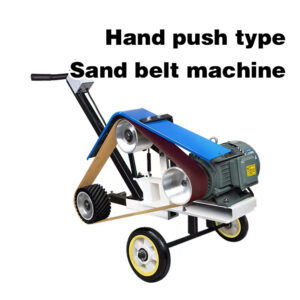
Cordless Belt Sander: Freedom vs. Power – Which Wins?
Tired of tripping over power cords while sanding? Cordless belt sanders promise convenience, but do they deliver the performance you need for professional results?
Cordless belt sanders provide excellent mobility and are ideal for quick jobs or tight spaces, but they typically offer less power and shorter runtime compared to corded models, making them better suited for light to medium tasks.
Dive Deeper: Cordless Belt Sander Pros and Cons
Feature Comparison:
| Feature | Cordless Pros | Cordless Cons |
|---|---|---|
| Power | Brushless motors improve efficiency | Lower amps (5-8A equiv.) than corded |
| Runtime | Battery swap flexibility | Limited to 20-60 mins per charge |
| Portability | No cord tangles | Often heavier due to battery |
| Best For | Outdoor or remote work | Not for heavy-duty sanding |
Battery Considerations:
- Voltage Matters:
- 18V: Light tasks (trim work)
- 36V+: Better for decks/furniture
- Expandability: Look for shared battery systems if you own other tools.
Pro Tip: For extended use, invest in high-capacity batteries (5.0Ah+) and keep a spare charged for uninterrupted work.
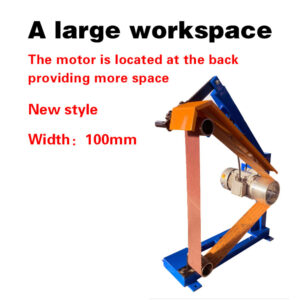
Belt Sander Bench: The Hybrid Solution for Precision Work
Need the versatility of a belt sander with the stability of a bench tool? A belt sander bench could be your workshop’s missing link—here’s why.
Belt sander benches combine a stationary base with a traditional belt sander, offering stability for detailed tasks like sharpening tools or refining small woodwork, bridging the gap between handheld and industrial machines.
Dive Deeper: Getting the Most from a Belt Sander Bench
Setup and Use Cases:
| Configuration | Best For | Accessory Pairings |
|---|---|---|
| Horizontal | Flattening stock | Sanding table extensions |
| Vertical | Edge work | Angle guides |
| Tilted | Complex angles | Magnetic featherboards |
Popular Applications:
- Knife and Tool Sharpening:
- Use fine-grit belts (600+)
- Attach a leather strop for polishing
- Small Woodcrafts:
- Ideal for model making
- Perfect for rounding edges
- Metalwork:
- Deburring metal parts
- Use zirconia belts for longevity
Safety Note: Always secure the workpiece firmly and avoid loose clothing when working near the moving belt.

Conclusion: Whether you opt for a handheld for flexibility, cordless for convenience, or a bench-mounted sander for precision, the right choice depends on your project scale, workspace, and power needs. Plan before you sand!