
Bench Grinder Wheels: Complete Guide to Selection and Use
Tired of burning your workpieces or wasting money on ineffective wheels? Choosing the right bench grinder wheel makes all the difference in finishing quality and tool life.
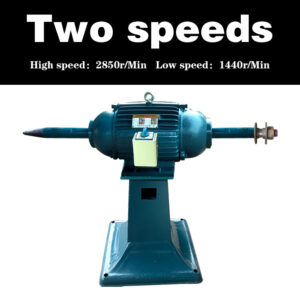
The optimal bench grinder wheel depends on material hardness (aluminum oxide for steel, silicon carbide for carbide/ceramics), grit size (24-120 for shaping, 150+ for finishing), and bond type (vitrified for general use, resin for precision).
While bench grinders excel at rapid material removal, specialized wheel grinders offer finer control for delicate polishing tasks - like restoring stainless steel watches to museum-quality shine.
Wheel Grinder: Specialty Tools for Precise Applications
Getting poor polish results on small items? Wheel grinders provide the speed control and wheel diversity that bench grinders can't match for detailed finishing work.
Wheel grinders differ from bench grinders by offering:
- Lower RPM ranges (500-3,500 vs 3,000-10,000 RPM)
- Quick-change wheel systems
- Articulating work rests
- Dust collection ports
Deep Dive: Wheel Grinder Configuration
Wheel Type Comparison
| Wheel Material | Best For | RPM Range | Lubrication Needed |
|---|---|---|---|
| Felt | Final polishing | 400-800 | Yes (rouge compound) |
| Cotton | Buffing | 600-1,200 | Yes |
| Leather | Edge polishing | 800-1,500 | Optional |
| Rubber | Deburring | 1,000-2,000 | No |
Speed Settings for Common Tasks
| Task | Recommended RPM | Wheel Diameter |
|---|---|---|
| Heavy material removal | 1,500-2,500 | 6-8" |
| General shaping | 1,000-1,800 | 4-6" |
| Fine polishing | 600-1,200 | 2-4" |
| Micro-finishing | 400-800 | 1-3" |
Accessory Recommendations
- Micro mandrels: For tight spaces in watch casings
- Flex shafts: Provide handpiece control equivalent to dental tools
- Diamond dressing sticks: Maintain wheel shape between uses

Polish Stainless Steel Watch: Achieving Jewelry-Grade Finishes
Ruined a watch case with visible scratches? Professional watchmakers use these exact techniques to restore luxury timepieces to better-than-new condition.
Polishing a stainless steel watch requires:
- Disassembly (remove movement/crystal)
- Progressive sanding (600-2500 grit)
- Tripoli compound on muslin wheel
- Final hand-rubbing with jeweler's rouge
Deep Dive: Watch-Specific Polishing Protocol
Essential Tools
| Tool | Purpose | Safe Alternative |
|---|---|---|
| Horotec movement holder | Secures case | Rubber jaw vise |
| Bergeon peg wood | Clean crevices | Toothpicks |
| Fiberglass scratch brush | Deeper scratches | Never substitute |
| Shellac stick | Protects engravings | Beeswax |
Grit Progression Guide
Deep Scratch Removal:
- Start with 600 grit (if needed)
- Use adhesive-backed abrasives on small mandrels
- Lubricate with light watch oil
Surface Refinement:
- Progress through 800 → 1200 → 1500 → 2000 → 2500
- Change sanding direction by 60° each step
- Inspect under 10x loupe between stages
Final Polishing:
- Apply green chromium oxide on felt bob
- Use separate wheels for case vs bracelet
- Hand-polish with 0.5µm diamond paste
Protecting Your Work
- Apply NSF-approved protectant: Food-safe for watch backs
- Use air displacement spray: Prevents water spots in screw holes
- Store with anti-tarnish strips: In airtight containers
Conclusion: From heavy bench grinding to delicate watch finishing, matching wheel technology to each task's specific requirements produces professional results while minimizing material waste and rework.