
Ridgid Belt Sander: Pro-Grade Performance or Overhyped Hardware?
Need industrial-level sanding without the industrial price tag? Ridgid belt sanders promise contractor-grade durability – but do they stand up to daily abuse?
Ridgid belt sanders deliver reliable power (typically 7-12 amps) and precision with features like tool-free belt changes, cast aluminum construction, and LSA-backed warranties, making them excellent for serious DIYers and pros on a budget.
While belt sanders excel at fast material removal, orbital sanders dominate finish work – but how do you decide which tool fits your project?
Belt Sander vs Orbital: Which One Should You Actually Reach For?
Tired of grabbing the wrong sander and ruining your workpiece? Understanding the fundamental differences between belt and orbital sanders saves time and materials.
Belt sanders rapidly strip material with linear motion (ideal for leveling and shaping), while orbital sanders use random rotation for swirl-free finishes (perfect for final prep before staining or painting).
Dive Deeper: Choosing the Right Tool for the Job
Performance Comparison Table
| Feature | Belt Sander | Orbital Sander |
|---|---|---|
| Motion | Linear | Random orbital |
| Best For | Fast stock removal, edges | Fine finishing, paint prep |
| Grit Range | 40-220 | 60-400+ |
| Dust Control | Moderate (high volume) | Excellent (low swirl) |
When to Use Each
- Belt Sander:
- Flattening tabletops
- Removing paint/stain quickly
- Sharpening tools or blades
- Orbital Sander:
- Final sanding before finishing
- Smoothing drywall patches
- Auto bodywork prep
Pro Tip: Keep both tools in your shop—use the belt sander for heavy work first, then switch to the orbital for a flawless surface.

Belt Disc Sanding Combo: Are Two Tools Really Better Than One?
Short on space but need versatile sanding options? Belt/disc combos promise convenience – but many sacrifice performance. Here’s how to pick one that actually works.
A high-quality belt/disc combo should include at least a 6"x48" belt and 9-12" disc, separate motors, and cast iron tables to avoid the limitations of budget models.
Dive Deeper: What Separates Good Combos from Bad Ones
Key Features to Look For
| Feature | Budget Model | Pro-Grade Combo |
|---|---|---|
| Belt Size | 4"x36" | 6"x48" or larger |
| Disc Diameter | 8" | 12" |
| Motor Power | 0.75HP shared | 1HP+ per function |
| Table Adjustability | Fixed angle | 0-90° tilting |
Best Applications for Combos:
- Furniture Building: Easily switch between shaping and fine sanding.
- Knife Making: Grind bevels and finish edges in one station.
- Auto Restoration: Tackle metal smoothing and paint prep efficiently.
Avoid This Mistake: Cheap combos often have sloppy belt tracking – ensure the unit has a micro-adjust knob for precision alignment.
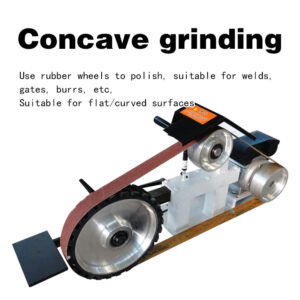
Conclusion: Ridgid belt sanders offer robust value, orbital sanders shine in finishing, and high-end combos bring efficiency – choose based on your project needs, not just convenience.